SEO in 2026 is not about keywords, word count, or clever titles; it is about clarity. If your content quickly answers the reader’s question, is easy to scan, and clearly shows real experience, it has a far better chance of being read by users and picked up by AI systems like Google’s AI Overviews. That single shift from “optimizing for rankings” to “optimizing for understanding” is the core of every strategy discussed below.
Table of Contents
Why Do Old SEO Rules No Longer Work Anymore?
For years, bloggers followed a particular formula: choose a keyword, insert it into the title and headings, write a lengthy post, add an FAQ, and publish. This method is now outdated, as search engines and AI tools no longer focus solely on keywords; they seek to understand context, experience, and overall usefulness. AI Overviews and AI-based search technologies do not eliminate the need for SEO. Instead, they are less likely to surface unclear, cluttered, or low-value content.
The 3 Priorities for SEO for Bloggers in 2026

To achieve success with SEO in 2026, prioritize these three strategies:
1. Update What Already Works
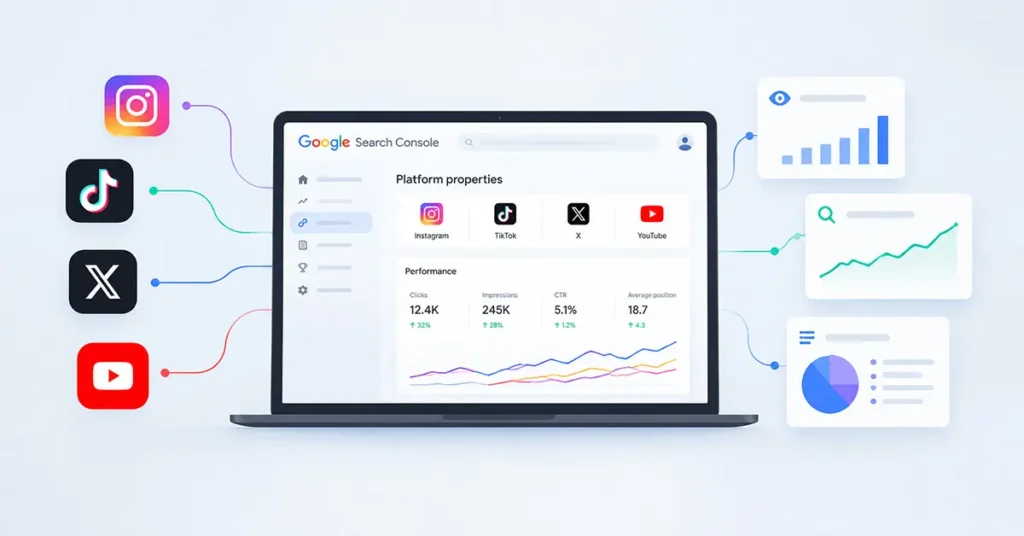
Rather than creating new posts every week, use Google Search Console to identify articles that already receive impressions but are not performing well. Revise these articles by enhancing their structure, updating the information, and incorporating stronger examples. Simply changing the publish date without improving the content does not qualify as an update; both readers and search engines can tell the difference.
2. Don’t Depend on Google Alone
Search traffic can disappear suddenly due to an algorithm update or the introduction of a new AI feature. This is why every blogger should have at least one owned channel, typically an email list that allows readers to reconnect without having to start from the beginning. A helpful question to consider is: “If my Google traffic vanished tomorrow, how would people still find me?”
3. Make Every Page Easy to Understand
To succeed with SEO, simplify your approach. Focus on making each page easier to read and navigate instead of relying on outdated optimization techniques. Ensure that every page is easy for both people and AI to understand. By implementing these strategies, you’ll establish a stronger foundation for long-term search visibility and sustainable traffic.
The table below compares traditional SEO practices with modern SEO best practices.
| ELEMENT | OLD PRACTICE | BEST PRACTICE |
| Introduction | Long introductions | Answer first |
| Headings | Keyword stuffing | Natural headings |
| Images | Repetitive images | Relevant images |
| Internal links | “Click here” | Descriptive anchor text |
| FAQs | Filler questions | Real reader questions |
| Schema | Exaggerated data | Match page content |
| Writing style | For search engines | For people and AIs |
| Word count | Chasing 2000+ words | Only necessary words |
| SEO plugins | Chasing scores | Prioritize usefulness |
How AI Search Changes SEO?
AI search is transforming how people find information online. Instead of just displaying a list of blue links, search engines are increasingly providing direct answers through features like AI Overviews and conversational search experiences. These systems analyze multiple trusted sources to create concise summaries. This shift makes it crucial to publish content that is clear, well-structured, and demonstrates genuine expertise. Although traditional ranking signals still play a role, AI-powered search prioritizes content that directly answers questions, uses descriptive headings, and offers accurate, firsthand information that is easy to understand and cite.
Google also emphasizes that traditional SEO still matters for AI Search. The same SEO fundamentals used for Google Search, such as making pages crawlable, using clear internal links, and creating helpful content, continue to apply to AI-powered search features.
The Modern SEO Model
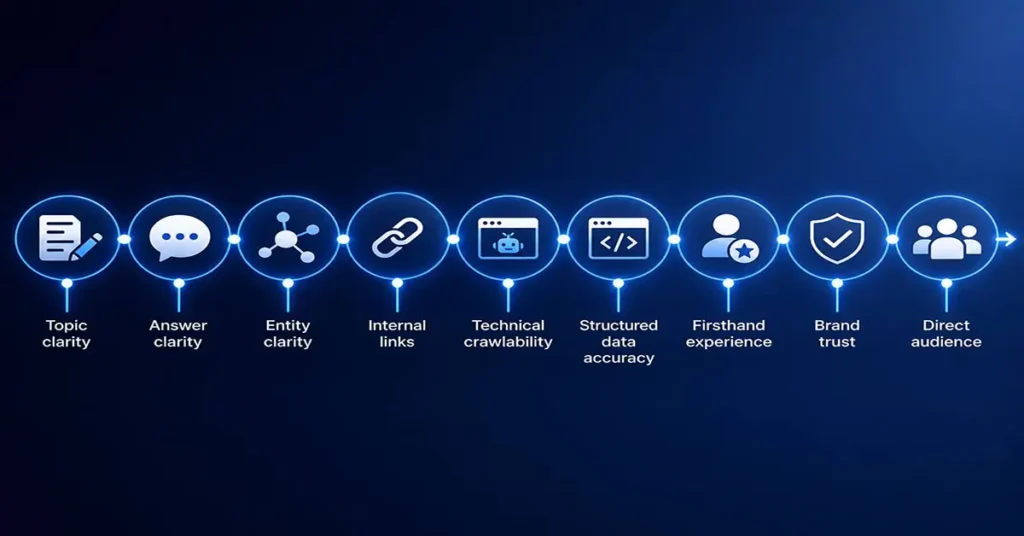
SEO is no longer driven by a single ranking factor or a checklist of keyword optimizations. Instead, search visibility is built through a series of connected signals that help both readers and AI understand and trust your content.
The modern SEO model looks like this:
Topic clarity → Answer clarity → Entity clarity → Internal links → Technical crawlability → Structured data accuracy → Firsthand experience → Brand trust → Direct audience
Each step reinforces the next. A well-defined topic allows for clear answers, helping search engines understand the content. Strong internal links provide context, while proper technical crawlability and accurate structured data ensure easy access for search engines. To ensure your structured data is implemented correctly, follow Google’s Structured Data documentation, which explains the supported schema types and best practices for search visibility. Building an email list or community creates an audience that isn’t solely reliant on search traffic. Together, these factors strengthen your SEO strategy for 2026. Google’s Search Quality Evaluator Guidelines also emphasize the importance of Experience, Expertise, Authoritativeness, and Trust (E-E-A-T), reinforcing why firsthand knowledge and credible content matter for long-term search success.

Ajmal has a background in Communicative English and works across digital marketing, web development, content creation, and related digital areas. At Oratraex, he focuses on gaming, digital marketing, technology, and emerging digital trends, helping readers understand content that matters in the digital world.